About South Sudan
Overview
- Official name: Republic of South Sudan
- Independence: 9 July 2011
- Capital: Juba
- Population: approximately 12.2 million (2025 estimate, UNFPA) — South Sudan has not held a full national census since 2008, so this is a UN projection rather than a count
- Official language: English (Juba Arabic widely used as a lingua franca; 61 living indigenous languages)
- Currency: South Sudanese Pound (SSP)
- Time zone: East Africa Time (UTC+3)
- States: Central Equatoria, Western Equatoria, Eastern Equatoria, Jonglei, Unity, Upper Nile, Lakes, Warrap, Western Bahr el Ghazal, and Northern Bahr el Ghazal, plus the Greater Pibor and Ruweng administrative areas and the Abyei Area (special administrative status), per the 2020 peace agreement
- Constitutional framework: Transitional Constitution of the Republic of South Sudan (2011) — still in force; the permanent constitution remains a work in progress
People and Environment
South Sudan covers approximately 644,329 km² (248,777 sq mi) — the World Bank’s current surface-area figure — with highlands, mountains, and hills along its eastern, southern, and western borders, and numerous rivers draining into a central depression.
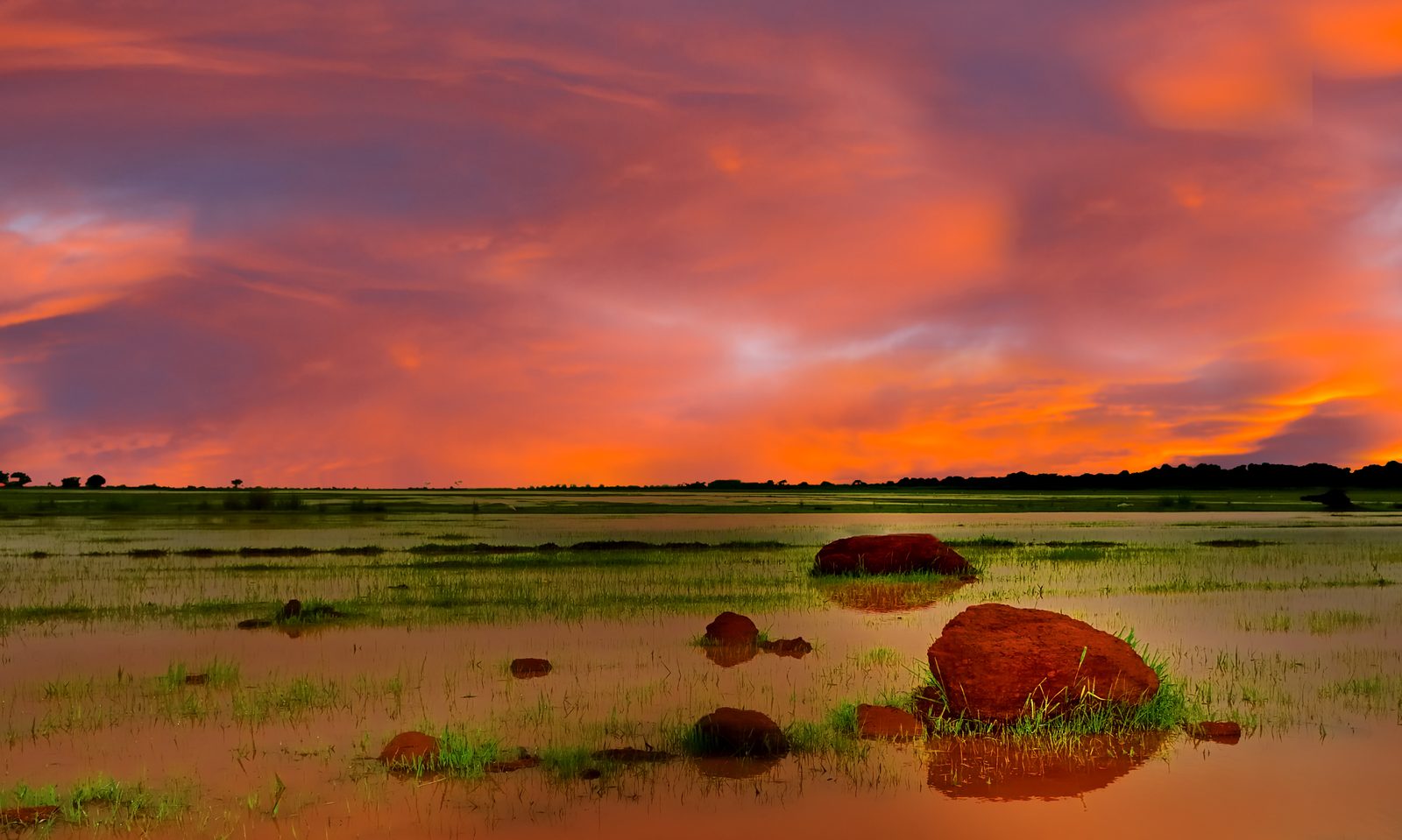
The Sudd, the largest grass swamp in the world, expands during the wet season to flood surrounding savannas and contracts in the dry season, shaping conditions for herders, fishers, and wildlife. The White Nile enters from the Sudan–Uganda border and remains navigable year-round from Juba to Khartoum despite passing through the Sudd.
Wildlife: South Sudan is home to the largest overland migration of large mammals on Earth. An estimated six million white-eared kob, tiang, Mongalla gazelle, and Bohor reedbuck move seasonally between Boma and Badingilo National Parks and the wildlife corridors connecting them — more than double the size of the Serengeti’s wildebeest migration. In July 2026, UNESCO inscribed the Boma–Badingilo Migratory Landscape as South Sudan’s first World Heritage Site, via an emergency procedure that simultaneously placed it on the List of World Heritage in Danger, reflecting both its exceptional value and the pressures it faces.
People: South Sudan’s population includes over 60 ethnic groups. The Dinka are the largest, at roughly 36% of the population, followed by the Nuer at around 16%; other major groups include the Shilluk, Azande, Acholi, Bari, Toposa, and Murle. Most South Sudanese are Christian (around 60%, chiefly Catholic, Anglican, and Presbyterian), with the rest following traditional African religions or, in a small minority, Islam. More than 80% of the population lives in rural areas. South Sudan also has an established diaspora community in the United Kingdom: the 2021 census recorded just over 14,000 South Sudan-born residents, though the Refugee Council estimates the real figure, including UK-born children and those not captured by census methodology, at closer to 24,000.
Travel Information
British visitors: check the latest FCDO travel advice before you travel. The UK Foreign, Commonwealth & Development Office publishes and regularly updates official travel advice for South Sudan, including current safety and security guidance. Read the current gov.uk South Sudan travel advice — the notes below cover general practical information only and are not a substitute for it.
Vaccinations: strongly recommended, particularly for first-time visitors — typhoid (during the rainy season, roughly late April to late November), cholera (dry season), malaria prevention, meningitis, and yellow fever. A yellow fever certificate is required to enter Kenya if travelling onward through it.
Money: the South Sudanese Pound is the official currency; US dollars are widely accepted as a preferred hard currency. Credit cards are not widely accepted — carry sufficient cash. Exchange is available at banks and bureaux de change in major towns.
Photography: military installations and security-sensitive sites may not be photographed or filmed. Journalists need a permit from the Ministry of Information.
Climate: wet season roughly late April–late November (hot and humid), dry season otherwise (hot and dry); December–January nights can be cold — bring warm layers.
Driving: traffic drives on the right. Self-driving is discouraged for those unfamiliar with local conditions; hiring a local driver is recommended.
For visa requirements, see Visas & Passports.